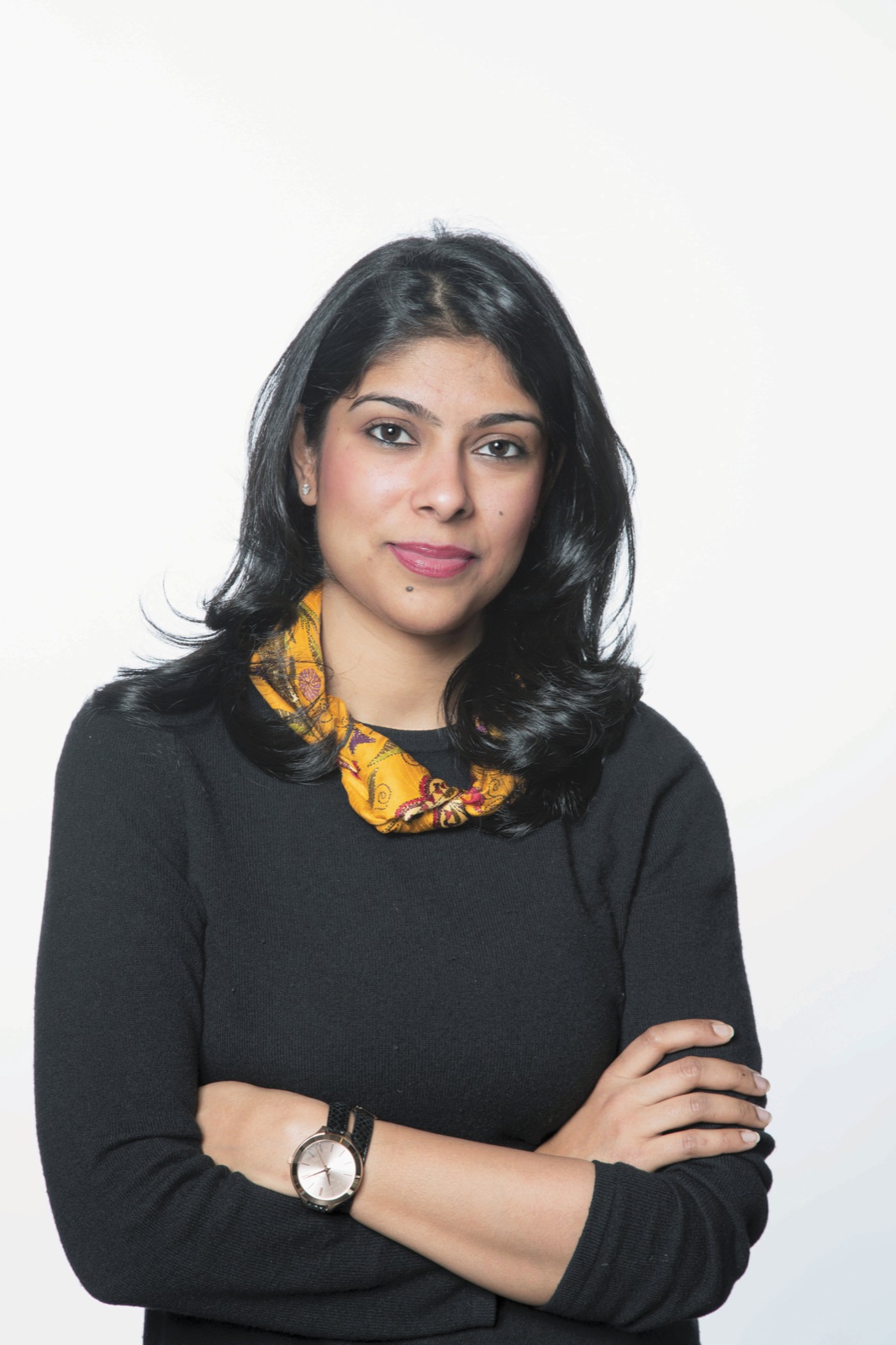
Worldwide Head of Modern & Contemporary South Asian Art, Sotheby’s · New York
Manjari Sihare-Sutin is a New York–based art historian, curator, and auction specialist. She serves as Senior Vice President and Worldwide Head of Modern & Contemporary South Asian Art at Sotheby’s, where she directs the category’s global strategy and major auctions across New York, London, the Middle East, and Asia.
Before joining Sotheby’s in 2015, Sihare-Sutin was Curatorial Manager at the Queens Museum, organizing exhibitions devoted to Indian, Tibetan, Cuban, and contemporary art, as well as projects featuring Andy Warhol, Pedro Reyes, and Zhang Hongtu. She holds graduate degrees in Art History from the National Museum Institute in New Delhi and Visual Arts Administration from New York University. Her work has helped expand international recognition and auction benchmarks for leading South Asian artists, including M.F. Husain, S.H. Raza, F.N. Souza, Zarina, and Jagdish Swaminathan.
In this interview, Manjari Sihare-Sutin reflects on discovering that her calling was not to create art but to understand, champion, and build narratives around it. She discusses the scholarship, trust, and stewardship behind the art market; the responsibility of presenting South Asian artists as essential contributors to global art history; and the confidence she sees in a new generation moving across cultures and disciplines. Looking ahead, she views AI as another tool that can expand creativity while maintaining that meaning comes from human intention and lived experience, and cautions that neither technology nor the market’s accelerating pace should displace nuance, scholarship, and genuine engagement with art.
Ariya: When you were young, what did you imagine your future would look like ?
Manjari Sihare-Sutin: I didn’t really know for a long time. I grew up with art all around me, so I always knew I wanted creativity to be part of my life, but I hadn’t figured out in what way. It was only when I got to art college that things began to click and I realized my path wasn’t necessarily to become an artist, but to build a career in the art world.
Ariya: You initially wanted to become an artist. What made you realize your calling was elsewhere?
Manjari Sihare-Sutin: When I joined art college, I thought I would study applied art and eventually work in advertising. But being surrounded by incredibly talented artists made me realize two things: first, just how gifted they were, and second, that my own strengths lay elsewhere. At the same time, art history was part of the curriculum, and I found myself increasingly drawn to the theory, history, and ideas behind art. That curiosity grew into a passion, and although I didn’t know exactly where it would lead, it became clear that my calling wasn’t to make art, but to understand it, champion it, and build a career around it.
Ariya: Do you still create art privately, or do you express creativity differently today?
Manjari Sihare-Sutin: I don’t make art in the traditional sense, but I think creativity takes many forms. Curating collections, building narratives around artists, and shaping how South Asian art is presented globally are all deeply creative pursuits.
Ariya: What do people outside the art world misunderstand about your job?
Manjari Sihare-Sutin: People often assume that my job is primarily about buying and selling art and, given the numbers involved and the Sotheby’s name, that it’s all rather glamorous. There are certainly glamorous moments, but the reality is much more layered. It’s about scholarship, relationships, trust, and stewardship. In many ways, we are also ambassadors for art: helping people understand artists and their work, building context around them, and connecting them with audiences and collectors across generations and geographies.
Ariya: What responsibility do you feel when representing South Asian artists on a global stage?
Manjari Sihare-Sutin: It’s a privilege and a responsibility. I want to ensure these artists are understood within the richness of their own histories while also being recognized as integral to the broader story of global art, not as a niche, but as essential contributors to it.
Ariya: What excites you most about the next generation of South Asian artists?
Manjari Sihare-Sutin: Their confidence. They move effortlessly between cultures and disciplines while remaining deeply connected to their own experiences. They’re expanding what South Asian art can be without feeling constrained by expectations.
Ariya: Throughout history, every major technology, from photography to digital art, was initially met with skepticism. Do you think AI will ultimately expand human creativity in a similar way, or is it fundamentally different?
Manjari Sihare-Sutin: I think AI will become another creative tool, much like photography once did. It can expand possibilities, but it doesn’t replace the uniquely human qualities of curiosity, lived experience, and imagination.
Ariya: Can a work created with AI ever have the same emotional or cultural significance as one created entirely by a human? Why or why not?
Manjari Sihare-Sutin: It can certainly be meaningful, particularly if it’s guided by a thoughtful human vision. But emotional and cultural significance ultimately comes from intention, context, and lived experience, not from the technology itself.
Ariya: Do you think future generations will define originality differently than we do today?
Manjari Sihare-Sutin: Yes. Every generation redefines originality. I think originality will increasingly be measured not by whether every element is entirely new, but by how ideas are combined, interpreted, and made meaningful.
Ariya: Looking towards the future, what excites you most in the art world? What concerns you the most?
Manjari Sihare-Sutin: I’m excited by the growing global recognition of artists who have historically been overlooked, including many from South Asia. My greatest concern is that speed, whether driven by technology or the market, shouldn’t come at the expense of scholarship, nuance, and genuine engagement with art.
Manjari Sihare-Sutin, interviewed by email by Ariya Mukherjee-Gandhi, date not recorded. Traceable, traceableart.org/interview-manjari-sihare-sutin.html