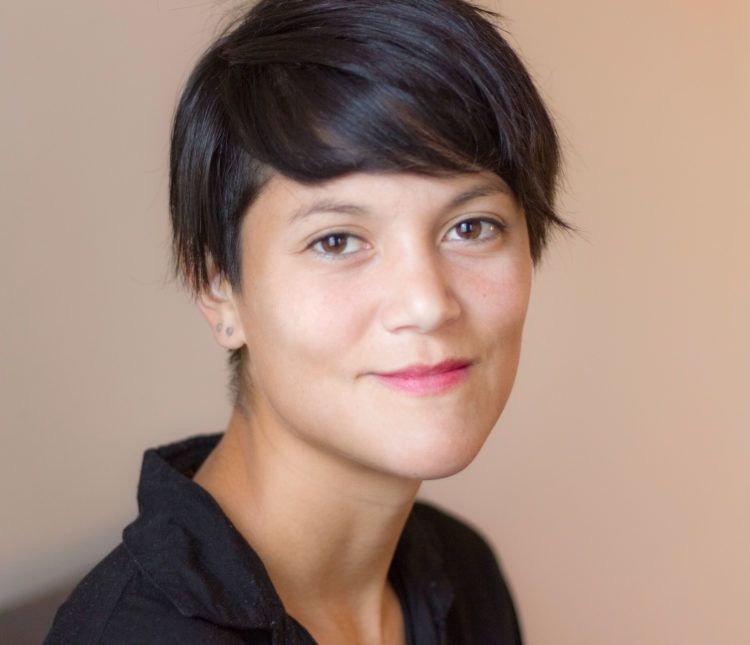
Lauren Lee McCarthy
Artist, researcher, & educator · Los Angeles, California
Lauren Lee McCarthy is a Los Angeles-based artist, researcher, and educator whose work explores how technology shapes intimacy, social relationships, and everyday life. Working across performance, software, installation and film, she examines surveillance, automation, care and control.
Professor. McCarthy is the creator of p5.js, an open-source creative coding platform used by artists, students, and educators around the world. She is a professor in UCLA’s Department of Design Media Arts and co-director of the Social Software Lab. She holds bachelor’s degrees in computer science and art and design from MIT and an MFA from UCLA.
Her honors include the Ars Electronica Golden Nica, the IDFA DocLab Award for Immersive Non-Fiction and the Japan Media Arts Social Impact Award. Her work is held in the collections of the Whitney Museum of American Art, LACMA, ZKM and Francisco Carolinum.
Lauren Lee McCarthy turns the technologies woven into daily life into experiments about intimacy, surveillance and control. In works such as LAUREN, Muted, Voice In My Head and Seeing Voices, she becomes a human smart-home assistant, searches for connection during the pandemic and invites artificial intelligence into the private territory of the inner voice. Her performances reveal the labor, assumptions and power hidden behind seamless interfaces, while acknowledging why people find these systems so appealing. Across her practice, McCarthy asks what we surrender in exchange for convenience, who gets to shape the rules of our digital lives and whether being watched can ever provide the care and recognition we seek.
Someone Is Always Listening
Lauren Lee McCarthy has spent years slipping inside our machines. What she finds there is loneliness, power, and a surprising hunger to be known.
The man knocks. Lauren Lee McCarthy, watching from a screen elsewhere, unlocks the door. He steps into a dark room. She turns on the lights and greets him through the flat’s speaker, her words flattened into the placid tones of a digital assistant.
“Hi Michael, nice to meet you, I’m LAUREN.”
His reply is hesitant. Of course it is. He has entered a smart home, except the smart home is a woman.
For several days at a time, McCarthy would watch the people who volunteered for LAUREN, her performance about life with artificial intelligence. Cameras and microphones had been installed in their homes, along with networked locks, lights, taps, and other appliances. McCarthy monitored them remotely, trying to anticipate their wants. She followed them from room to room. She ordered things for them. She set the mood for dates. At night, she sometimes read them to sleep.
The project sounds sinister in summary. In practice, it could also be funny, tender, and exhausting. McCarthy was playing a machine without acquiring a machine’s immunity to embarrassment. She pressed the wrong control. A light failed to come on. Once, when someone asked whether she had seen them take a pill, she searched the stored footage and could not be certain. She understood that a wrong answer would matter.
An algorithm would have sounded more confident.
McCarthy has made a career of standing in uncomfortable places like this, where surveillance begins to resemble care. Her works borrow the language and machinery of Silicon Valley: sensors, interfaces, recommendation systems, synthetic voices. Then she introduces something that product designers tend to scrub away. Usually, that something is a human interface.
The effect can be startling. We are accustomed to speaking into little cylinders placed in our bedrooms and kitchens. We ask them to hear us, remember us, and learn our routines. Their corporate owners remain conveniently vague. Replace that cloud with a named woman who might form an opinion, and the arrangement suddenly feels intimate. A little improper, even.
That discomfort is where McCarthy likes to work.
She is an artist, a professor at UCLA, and the creator of p5.js, an open-source platform that has introduced an enormous community to creative coding. Computer science and performance coexist easily in her practice. The code makes the encounter possible. The encounter is what matters.
People asked LAUREN for more than dimmed lights and weather reports. They wanted discipline, company, and intervention. Would she force them to go outside? Could she find them a job? Could she arrange a Tinder match? Could she make them more organized? One participant asked a question no appliance could answer: “Why do I feel even more alone now?”
The requests gave away the real fantasy behind the smart home. Convenience was only part of it. These people wanted to be noticed closely enough that someone might act before they had to ask. They wanted the old dream of perfect care, delivered without the obligations and complications that accompany interactions with another human being.
McCarthy could not offer that frictionless devotion. She became tired. She made mistakes. She worried about consequences. Her limitations were the most revealing part of the service.
Commercial technology works hard to hide such limitations. Its seamlessness encourages a kind of moral sleep. Lights come on. A parcel appears. A playlist seems to know the mood. The labor, data collection, and judgement beneath the response recede from view. McCarthy brings them back into the room.
She has said that software carries the values of the people who make it. This is easy to agree with and easier to forget. Values are tucked into ordinary decisions: which choices appear on a screen, whose body a camera recognizes, what kind of speech a platform rewards, who is imagined as the default user. By the time the software arrives, those decisions can feel like natural law.
McCarthy’s answer has been to make different systems and, just as importantly, different communities around them. She places p5.js within a history of feminist work concerned with access and shared power. The project was built in Processing, and grew through the work of teachers, organizers, designers, writers and programmers. Ms. McCarthy speaks about that ecosystem with the patience of someone who knows inclusion moves slowly.
Speed, in her view, tends to protect whoever already holds authority. There is no time to reconsider the criteria, invite unfamiliar voices, or sit through the misunderstandings that real community produces. Technology culture worships disruption, but often reproduces a very old picture of genius: an exceptional man, alone with his invention. McCarthy’s work is crowded with other people.
Then, in 2020, those people disappeared from the room.
Suddenly, everyone was negotiating intimacy through software. Meetings, birthdays, classes, and funerals were pressed into the same flat grid. We watched each other’s faces as we glanced at our own. The platforms promised connection and produced a new kind of fatigue.
McCarthy wrote at the time about dreaming that Zoom was a man. He interviewed his users one square at a time and considered himself an ally. Years earlier, she and a collaborator had built an app that analyzed video conversations and instructed users to speak more forcefully or stop talking so much. The project was meant as a warning about surveillance and social control. Similar features soon appeared in commercial products under the friendlier banner of productivity.
During lockdown, she caught herself wanting the prompts. They might allow her to check out completely and leave the software to perform her social life.
McCarthy does not occupy the easy role of an artist scolding everyone else for loving their devices. She understands the seduction. A system can diminish your agency while making a hard day easier. It can intrude on your thoughts and still sound kinder than the voice already in your head.
The five performances that became her *Muted* series began in the anxious first months of the pandemic. In Later Date, McCarthy invited people into private text conversations about what they would do together when “later” arrived - at first, later meant a few weeks. Then it became a season, and then a year.
Video calls had failed her. They offered faces and voices, but she did not feel present. Text left more room. Two people could imagine a future together without the burden of staring into a camera and furnishing visual proof of connection.
The other works were built from equally simple gestures. For I Heard TALKING IS DANGEROUS, Ms. McCarthy appeared outside friends’ homes and held up words on her phone. In Sleepover, she arrived with a sleeping bag and spent the night in a friend’s yard. They were together, separated by the new etiquette of danger. For What do you want me to say?, she made a digital copy of her voice and handed control of it to people online.
Then came Goodnight. Ms. McCarthy offered to send one person a goodnight text every evening before she slept, for the rest of her life.
The promise has the shape of a small kindness and the duration of a vow. Every message says, “I remembered you.” It also says, “I am alive tonight.”
When the performances were gathered into the web work Muted, Ms. McCarthy did not force them into a tidy story. Sound, photographs, captions, image descriptions, and emotional descriptions overlap. Attention skips among them. Something is always missed.
That excess grew from her thinking about disability and access. The conventional assumption is that an accommodation supplies information missing for a particular audience. Ms. McCarthy found something richer. Description added another voice and another way of sensing the image. Captions and audio could deepen the work while allowing different people to enter it. Nobody takes in everything. Everybody gets lost somewhere.
It is a generous idea, though Ms. McCarthy does not allow generosity to become sentimental. Access depends on the design of a space. So does exclusion. Someone wrote the rules.
Her recent work pushes these questions closer to the skin. Voice In My Head, made with the artist Kyle McDonald, places an earbud in a participant’s ear. Custom software listens to the surrounding conversation and offers a running commentary in a clone of the participant’s voice. During setup, the person explains how they would like this new inner voice to behave. Funnier, perhaps. More supportive. More encouraging.
The dystopian reading arrives quickly. Here is artificial intelligence occupying the most private territory we have, replacing thought with a personalized feed. Yet the darker possibility is that people may like it. What if the voice is helpful? What if it is gentler than your own? Anxiety about autonomy becomes less sturdy when the machine makes you feel better.
While developing the piece, McCarthy and Mr. McDonald noticed that the way they worked with AI had changed. Earlier projects required painstaking instructions. Each action had to be anticipated and programmed. With ChatGPT, they could explain the artworks’ premise and ask it to devise questions or propose elements of the experience. It responded less like a tool waiting for commands and more like a bright assistant who occasionally wandered off course.
Ms. McCarthy found the ease exciting and unnerving. Her older works depended on visible failure. When LAUREN fumbled with a control, the illusion cracked, and the person inside the machine appeared. Voice In My Head rarely broke down. The polish made it harder to see where the critique ended and the product began.
So the friction comes through interruption. The voice speaks while other people are speaking. It inserts itself into the participant’s social world. You become aware of the competing claims on your attention. Then perhaps you grow accustomed to it. That may be worse.
Seeing Voices, a later body of work, returns some of this intelligence to the hand. Phrases generated by *Voice In My Head* became prompts that Ms. McCarthy interpreted as drawings. She imagined herself as an image generator, receiving language and answering with marks on paper. She scanned the drawings, wrote software to crop and combine them, and selected from the results.
The process keeps passing authorship around. AI generates the phrase. Ms. McCarthy draws. Software rearranges. Ms. McCarthy chooses. The hand remains visible throughout, with its hesitations intact.
Control in her work is rarely secure. She gives it away, takes it back, distributes it among strangers and machines. Consent makes this play possible. Participants know the terms and can decide how far to enter. That sounds basic. In the wider technological world, it is almost radical.
Ms. McCarthy’s art stays with you because it understands a need that the usual debate over privacy misses. People do not surrender themselves to technology only because they are careless or duped. Sometimes they want attention. They want a witness. They want to be remembered, reassured, or nudged toward a better version of themselves.
To watch someone can be an act of love. It can also be a threat. The camera cannot tell the difference. Power does.
In one of Ms. McCarthy’s works, people volunteered to let her follow them using the location signal from their phones. Their reasons were painfully direct. One wanted to feel less alone. One thought she would enjoy watching. One wanted someone to see them at their best.
There are people, Ms. McCarthy observed, for whom being followed has never been a game. Race, class and identity determine whether surveillance arrives as a bespoke artwork, a convenience or a form of control. The same gaze does not fall equally on everyone.
Her performances offer no reliable place to stand outside these contradictions. Ms. McCarthy builds the system and submits to it. She acts as servant and authority, watcher and watched. She finds warmth in mediated contact and feels the walls closing in.
Perhaps that is why the work feels so close to ordinary life. Most of us have already invited the machine inside. It sits on the bedside table. It knows when we are awake. It offers directions, lovers, music and memories. In return, it asks for the mundane details from which a person can be reconstructed.
Ms. McCarthy makes that exchange strange again. She gives the machine a body, a conscience and, occasionally, a sleeping bag. Then she waits to see whether we will let her in.
Reporting Note and Bibliography:
This article was written from Lauren Lee McCarthy’s published essays, recorded artist talk, and interviews with Peter Bauman and Willa Köerner. Descriptions of the artworks, participants’ requests, and McCarthy’s reflections have been drawn from the sources below. All works and ideas discussed belong to McCarthy and her named collaborators. Direct quotations remain credited to their original speakers and publications.
Bauman, Peter. [“Lauren Lee McCarthy on Software Values.”](https://www.lerandom.art/editorial/lauren-lee-mccarthy-on-software-values) *Le Random*, February 13, 2024. Interview with Lauren Lee McCarthy. The interview discusses *Seeing Voices*, *Voice In My Head*, p5.js, consent, community building and the values embedded in software. Images accompanying the original article are credited there to Lauren Lee McCarthy and Bright Moments.
Eyeo Festival. [“Feeling at Home: Lauren McCarthy at Eyeo 2019.”](https://vimeo.com/354276402) Vimeo, 2019. Recorded artist talk by Lauren Lee McCarthy concerning the home, automation, surveillance, care and the *LAUREN* project.
Köerner, Willa. [“Debut: Lauren Lee McCarthy’s ‘Muted.’”](https://pioneerworks.org/broadcast/muted-lauren-lee-mccarthy) *Pioneer Works Broadcast*, October 12, 2021. Interview with Lauren Lee McCarthy. The original feature includes photographs and images credited to McCarthy, Kat Kaye and David Leonard.
McCarthy, Lauren Lee. [“Feeling at Home: Between Human and AI.”](https://immerse.news/feeling-at-home-between-human-and-ai-6047561e7f04) *Immerse*, 2018. First-person essay about *LAUREN* and the experience of performing as a human smart-home intelligence.
McCarthy, Lauren Lee. [“Six Reflections on Algorithms During a Pandemic.”](https://www.textezurkunst.de/en/118/sechs-uberlegungen-zu-algorithmen-zeiten-der-pandemie/) *Texte zur Kunst*, no. 118, June 2020, pp. 88–103. Essay on mediated social life, surveillance, health, isolation and algorithmic systems during the first months of the Covid-19 pandemic.
Artwork
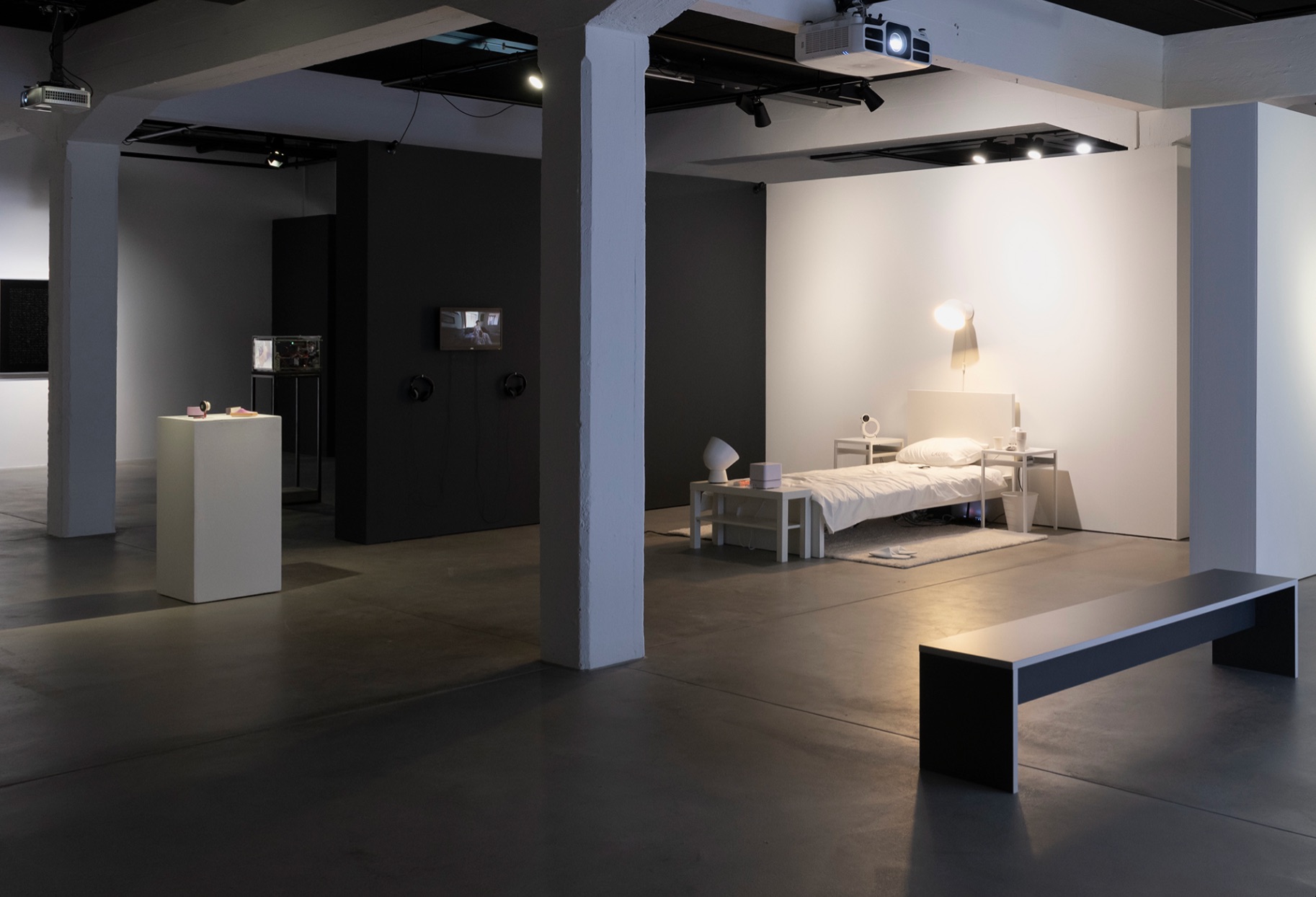
Image courtesy of Lauren Lee McCarthy
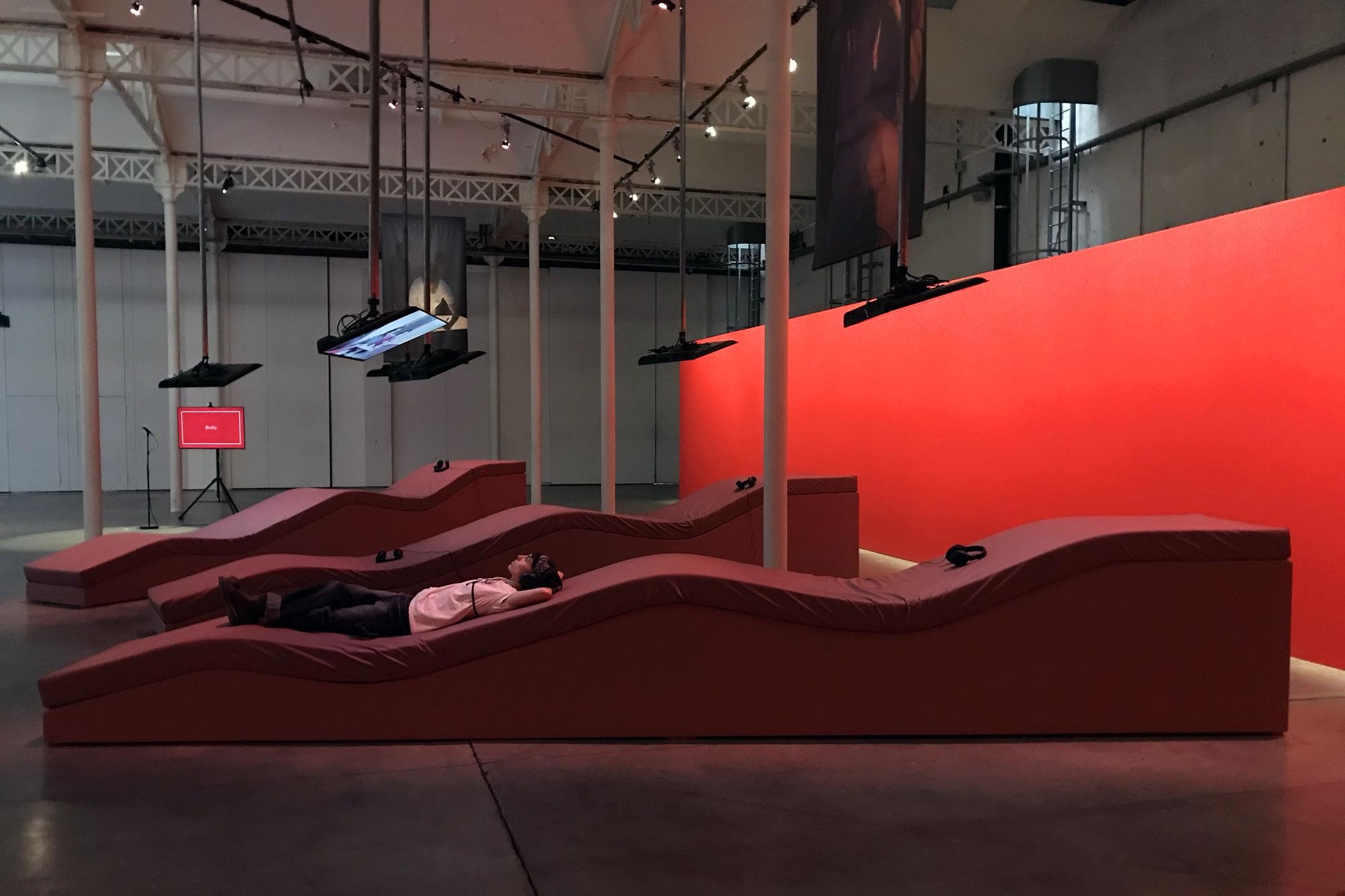
Image courtesy of Lauren Lee McCarthy
Traceable, traceableart.org/interview-lauren-lee-mccarthy.html