Painter · Colombo, Sri Lanka & Santiniketan, India
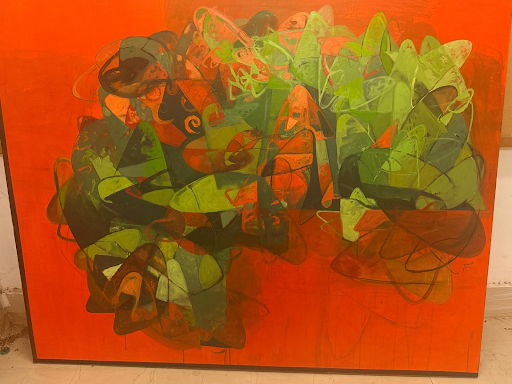
Ishani Senadhira is an upcoming Sri Lankan visual artist with a Master’s degree in Art from Santiniketan, India, and a Bachelor’s degree in Arts from the University of the Visual and Performing Arts, Colombo. Her practice includes the 2026 project Red Bindi, presented through SSVAD in India. She also contributes to arts education and public programming; in 2026, she led a session examining Jayantha Premachandra’s artistic legacy for a new generation.
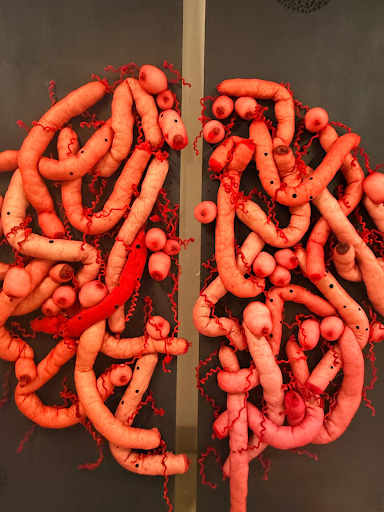
Ishani Senadhira discusses her journey from drawing as a child to studying painting in Colombo and at Visva-Bharati University in Santiniketan, India. She explains how Sri Lankan and Indian cultural traditions, including West Bengal’s kantha embroidery, have shaped her practice across painting and installation. Drawing on personal objects such as bedsheets, pillows and mattresses, Senadhira explores memory, intimacy and the overlooked strength of women. At the heart of her work is the soft power of motherhood and its role in building society. She also reflects on using digital tools to develop ideas while emphasizing that technology gains meaning through the artist’s choices and creative vision.
Recorded in conversation · published as an article · edited for length and clarity
Ariya: Tell me a little about your experience as an artist.
Ishani Senadhira: I am a Sri Lankan artist. I studied at Visva-Bharati University in Santiniketan, India. My main practice is painting, although I also work with installation. I completed my BFA in painting at the University of the Visual and Performing Arts in Colombo and continued developing my work during my master’s degree.
I later worked for a year as a temporary lecturer at the University of the Visual and Performing Arts. I have also taken part in several group exhibitions and workshops. An important next step for me is my first solo exhibition, which will be held in Santiniketan. I also hope to begin my PhD next year.
Ariya: What led you to become an artist?
Ishani Senadhira: It has a great deal to do with my personality and with the environment in which I grew up. In Sri Lanka, there are relatively few women artists with strong public visibility. I feel a need to establish my own place as a Sri Lankan woman artist, especially because my work is connected to feminist ideas and to my own experience as a woman.
I began painting and sketching when I was about six or seven years old. At that age, I did not really understand what an artist was. I only knew that I wanted to draw. I was never interested in subjects such as mathematics. Painting was always the thing I returned to.
When I entered university, there were many possible areas to study, including textiles, sculpture, ceramics and applied art. I chose painting for my special degree. Even then, I did not begin with a clear declaration that I would become an artist. That conviction grew as I learned more about modern and contemporary art. During my master’s studies in India, I encountered the work of many Indian artists. That experience gave me a clearer sense of the future I wanted. I understood that I needed to keep making work and establish my voice as an artist.
Ariya: Would your art be significantly different if you had studied somewhere other than India?
Ishani Senadhira: I had not thought about that before coming to India. Once I arrived, I became aware of how deeply culture shapes an artist. The cultural environment was different from Sri Lanka, and that difference made me ask how I could bring Sri Lankan and Indian traditions together in my own way.
My starting point remains my own body, my country, and the culture I come from. India gave me new material and visual experiences. In West Bengal, for example, I encountered kantha embroidery. Stitching already felt familiar because it had been present in my life since childhood, so I connected with it quickly. I began experimenting, studying, and sketching, allowing the form to change as the work developed.
S. H. Raza is an important example for me. He studied in France, where a teacher asked why he had travelled so far when he came from such a rich culture. Raza absorbed the technical knowledge and the language of abstraction he encountered in France, then turned again toward his own cultural roots. His use of the bindu (sacred dot) shows how an artist can learn internationally while drawing power from the culture that formed them. I find that story marvellous because it speaks to my own questions about learning in another country.
Ariya: What usually comes first for you: an idea, an emotion or a material?
Ishani Senadhira: Material and concept need to come together. Artists have always used materials, from the Renaissance and Baroque periods onward, although materials were often treated mainly as the means of producing an image. In contemporary art, the material itself can carry the concept.
I began thinking seriously about material during the fourth year of my bachelor’s degree, when I wrote my thesis on materialism. At that time, I used a bed in my work. A bed is a deeply personal space. From birth to death, we spend a significant part of our lives there. It holds rest, illness, intimacy, dreams, and memory.
I could have represented that experience with pastel, oil, or acrylic paint. I felt the idea could be explored more powerfully through the objects themselves. I used my pillow, bedsheet and mattress, allowing them to become parts of the artwork. My study of Pop artists, including Andy Warhol, also encouraged me to consider how familiar materials could communicate an idea. For me, material is essential to the way contemporary artists give physical form to thought.
Ariya: If someone understood only one thing about your art, what would you want it to be?
Ishani Senadhira: Contemporary artists often begin with the self. A personal experience can grow into a social message. Ai Weiwei’s work is one example of how lived experience can open onto a much wider public conversation.
My own work follows a similar path. I want my personal experience to leave a mark in society. I speak about women’s power through my own perspective, although I do not want the work to feel aggressive. I am interested in soft power, particularly the power of motherhood.
Mothers build society through forms of labour and care that are often quiet or overlooked. There is an extraordinary strength in that role. I want my work to make the power of motherhood visible and to give it the recognition it deserves.
Ariya: Have digital tools or technologies become part of your artistic process?
Ishani Senadhira: Technology has become useful to many artists, including me. I sometimes use tools such as Photoshop or Illustrator to develop an idea and plan the structure of a work before producing the final piece. That is one practical use.
Technology also gives artists access to information. We can research other artists, histories, and techniques through online resources and newer tools such as Gemini. Used thoughtfully, these technologies can help an artist test an idea and develop a work.
Ariya: Is there something technology can never replace in the creative process?
Ishani Senadhira: The answer depends on the artist and on the process they choose. Painting can be combined with printmaking, and printmaking may involve technological processes. Some artists work entirely by hand, while others need technological methods to achieve a particular result. Many new techniques are developing, and each artist decides how those techniques belong within the work.
For me, the important question is how the process serves the artist’s idea. The hand and the technological tool can exist together. Their value comes from the choices the artist makes.
Ariya: Thank you so much for joining me today.
Ishani Senadhira: You are very welcome. Thank you for inviting me to be part of the conversation.
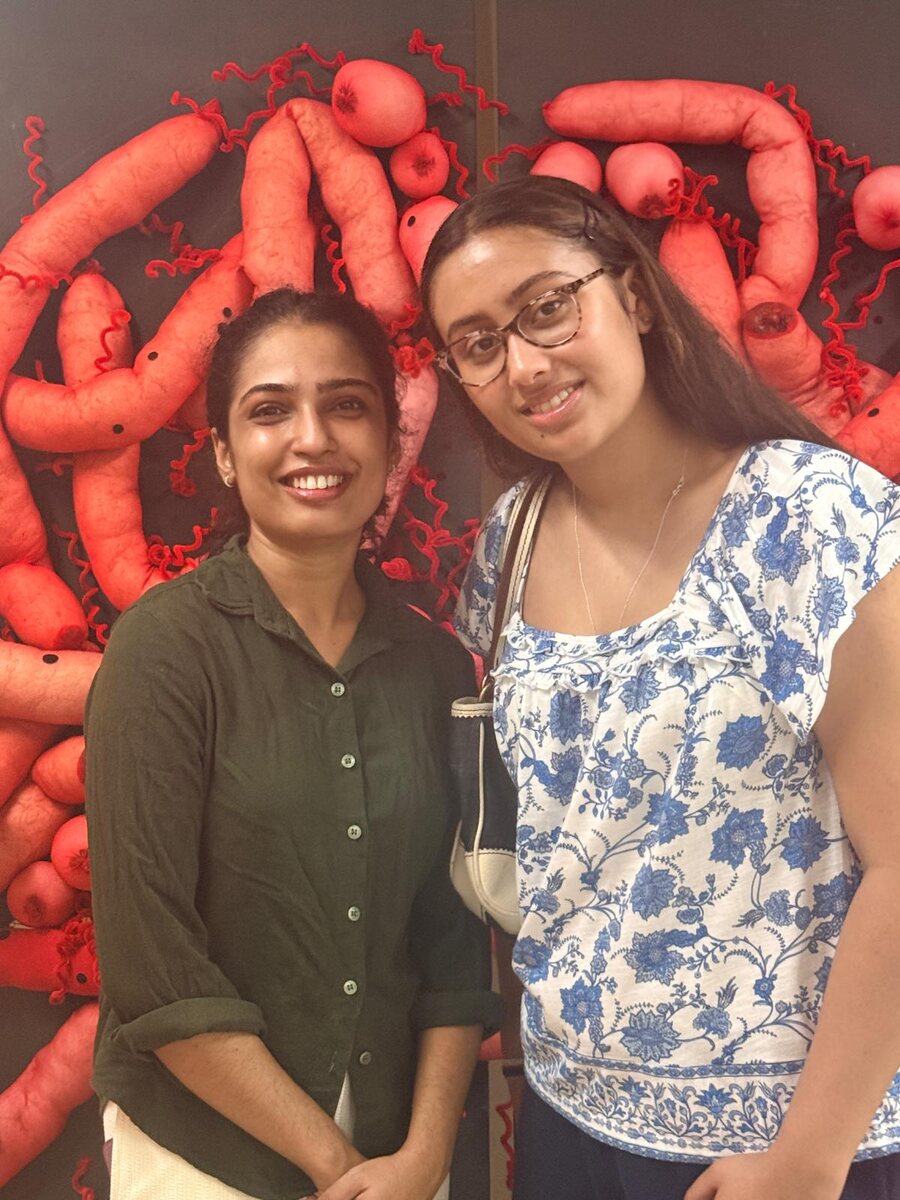
Ishani Senadhira, interviewed by Ariya Mukherjee-Gandhi, Santiniketan, 23 June 2026. Traceable, traceableart.org/interview-ishani.html